



Switching the Ignition On and Off
How to switch the Volkswagen ID.4 ignition on and off correctly, including the basic operating conditions and what the driver should expect from the vehicle.
Read guide




Preparations
1. Park the Volkswagen ID.4 securely on a flat, stable surface.
2. Open the hood to access the brake fluid reservoir.
Checking the Brake Fluid Level
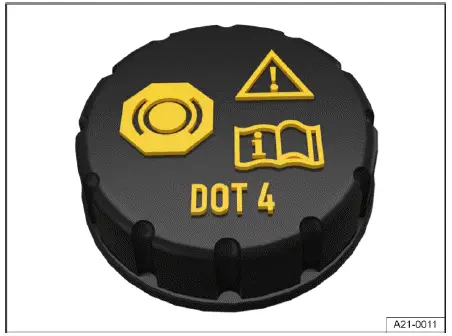
Fig. 1 In the hood space: Cap on the brake fluid reservoir.
The brake fluid reservoir in the Volkswagen ID.4 can be identified by its clearly marked cap → fig. 1.
On some Volkswagen ID.4 models, surrounding components may partially obstruct the view of the fluid level. If the level cannot be clearly seen, professional inspection by an authorized Volkswagen service provider is recommended.
The brake fluid level must always remain between the MIN and MAX markings on the reservoir →
 .
.
A slight drop in brake fluid level during operation is normal in the Volkswagen ID.4, as brake pads wear and automatically adjust.
WARNING
Low brake fluid level or incorrect brake fluid can impair braking performance or lead to complete brake failure.
Accidents and serious or fatal injuries may result.
Changing brake fluid
The brake fluid in the Volkswagen ID.4 must be replaced at regular service intervals. Authorized Volkswagen service centers can provide the exact maintenance schedule. Always ensure that only approved brake fluid is used during replacement procedures.
WARNING
Brake fluid absorbs moisture over time. This can lead to vapor lock during heavy braking, reducing braking efficiency and potentially causing total brake failure.
Troubleshooting
 Brake fluid level
The red warning indicator lights up, signaling that the brake fluid level in the Volkswagen ID.4 is too low.
 Do not continue driving! This may result in brake system failure.
1. Stop the Volkswagen ID.4 immediately in a safe location (→ Parking).
2. Check the brake fluid level.
3. If the level is low, contact an authorized Volkswagen dealer or service facility without delay.
Introduction
The 12 V battery in the Volkswagen ID.4 plays a crucial role in powering essential safety systems, especially in the event of a high-voltage system malfunction. During maintenance, this battery must be inspected and replaced if necessary.
Only perform work on the Volkswagen ID.4 electrical system if you are fully familiar with the procedures, safety requirements, and have the proper tools and equipment available.
Incorrect handling can result in serious injuries →
 . Always rely on qualified professionals when necessary.
Additional information about warning lights can be found in the troubleshooting section (→ 12-V vehicle battery).
Battery switch-off in an accident with triggering of the airbag
In the Volkswagen ID.4, if an accident occurs and airbags deploy, the 12 V battery is automatically disconnected via a pyrotechnic system. This prevents short circuits and enhances safety.
Detailed warnings for the 12 V vehicle battery
 Always wear eye protection.
 Battery acid is highly corrosive. Always wear protective gloves and eye protection.
 Fire, sparks, and open flames are strictly prohibited.
 Explosive gases may form during charging of the 12 V battery.
 Always keep children away from the battery and acid.
 Always follow the Owner's Manual instructions.
WARNING
Working on the 12 V battery and electrical system of the Volkswagen ID.4 can cause electric shocks, fires, or serious injuries.
WARNING
Explosive gases may form when working with the 12 V battery. Sparks can ignite these gases and cause severe injuries or death.
WARNING
A discharged 12 V battery may freeze at low temperatures. Acid leakage can cause long-term damage.
NOTICE
UV exposure can damage the battery housing.
NOTICE
Low temperatures can damage the battery.
 After reconnecting or replacing the 12 V battery in the Volkswagen ID.4, system settings such as time, date, and user preferences may be reset. Check and restore settings once the battery is fully charged.
Selected owner and service information from our Volkswagen ID.4 manual library.
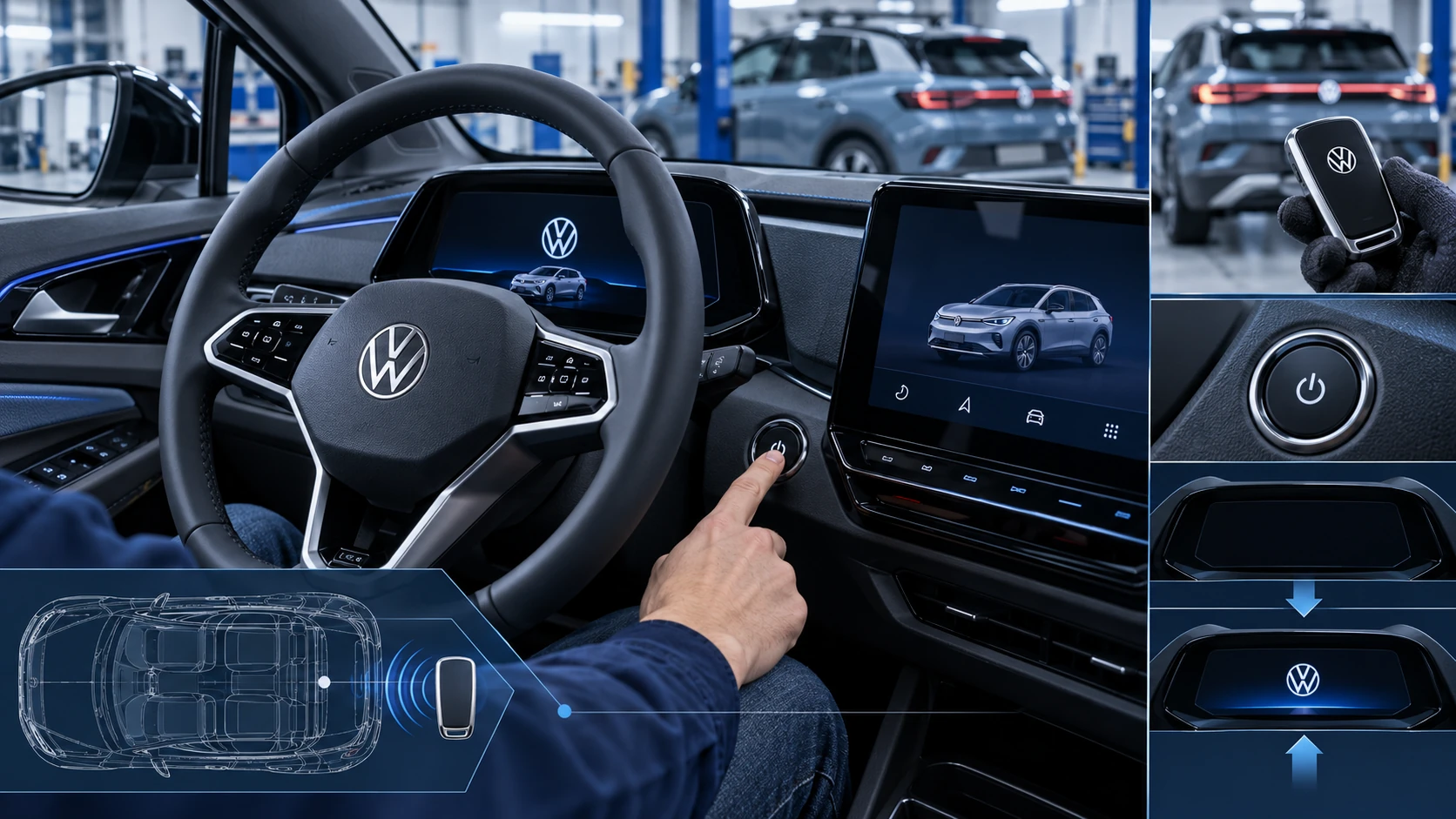 ID.4 Guide
How to switch the Volkswagen ID.4 ignition on and off correctly, including the basic operating conditions and what the driver should expect from the vehicle.
Read guide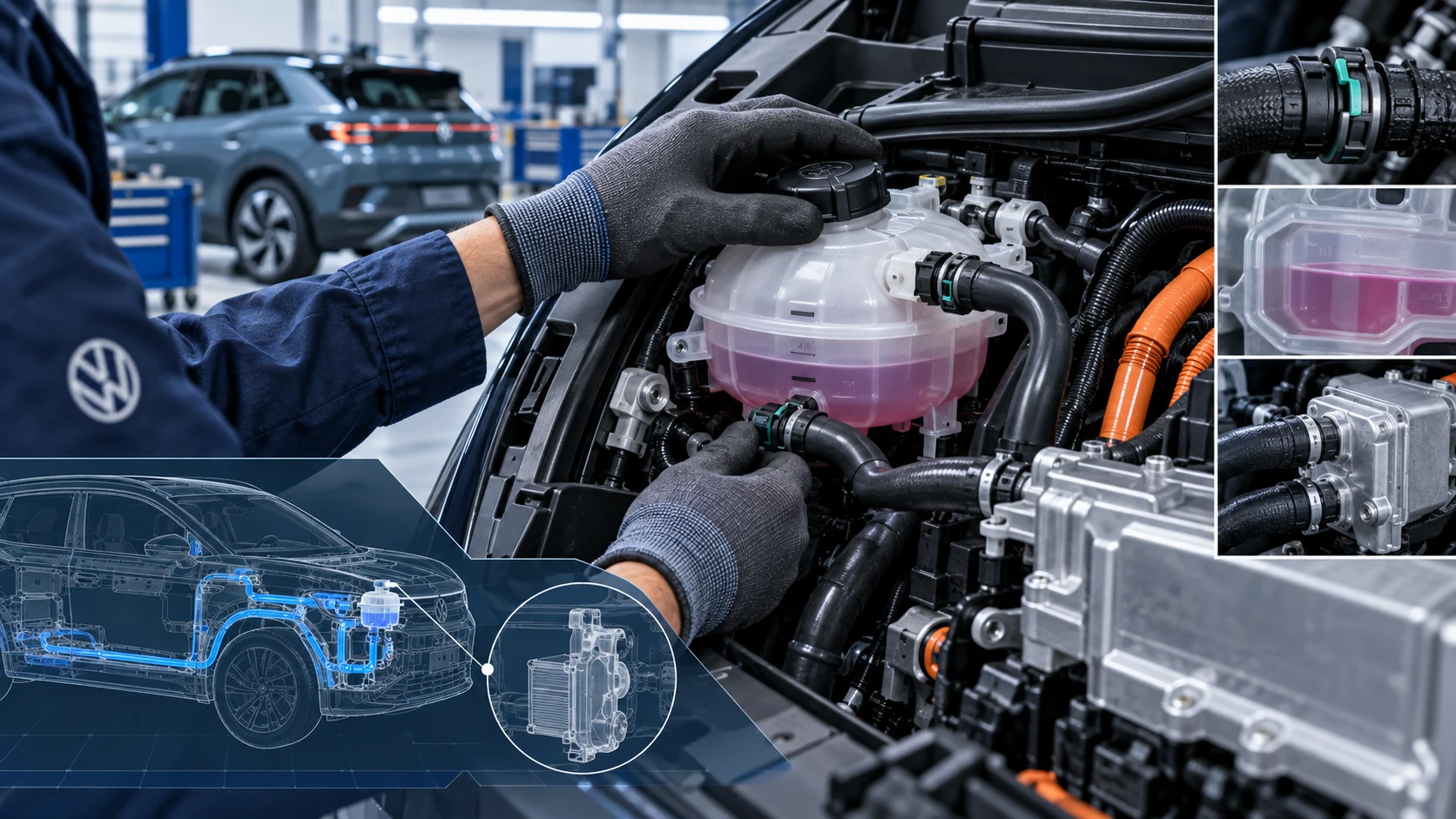 ID.4 Guide
Volkswagen ID.4 cooling system guidance covering coolant-related service information, inspection points and important precautions for thermal management components.
Read guide