



Joining and Separating Techniques
Practical Volkswagen ID.4 service procedures for joining and separating components, connectors and assemblies correctly and without unnecessary damage.
Read guide




Breaking in brake pads
In the Volkswagen ID.4, new brake pads require an initial break-in period of approximately 200 to 300 km (about 100 to 200 miles) before achieving full braking performance. During this phase, braking efficiency is slightly reduced, which is a normal characteristic of new components →
 . To compensate, apply slightly increased pressure to the brake pedal when needed.
During the break-in period, the braking distance in the Volkswagen ID.4 may be longer, especially during emergency braking or when automatic braking systems are activated. It is recommended to avoid heavy braking, aggressive driving, and maintaining short distances from vehicles ahead until the brake pads are fully conditioned.
Brake pad wear
The rate of brake pad wear in the Volkswagen ID.4 depends heavily on driving habits and conditions. Frequent city driving, winding roads, or a sporty driving style can accelerate wear. For optimal safety and performance, have the brake system inspected regularly by qualified professionals. Volkswagen recommends servicing at an authorized Volkswagen dealer or service facility.
External influences on the brake
Environmental factors can significantly affect braking performance in the Volkswagen ID.4. When brakes are wet — for example, after driving through water, in heavy rain, or after washing the vehicle — braking efficiency may be temporarily reduced due to moisture or ice on the brake components.
To restore optimal performance, carefully apply the brakes at higher speeds to dry them. Ensure that the braking force exceeds the recuperation effect so that the mechanical brakes engage properly. For this purpose, select gear N to temporarily disable energy recuperation during braking. Always ensure that these actions do not endanger other road users →
 .
.
A layer of road salt on brake discs and pads can also reduce braking efficiency and increase stopping distance in the Volkswagen ID.4.
If the brakes have not been used for an extended period on salt-treated roads, gently apply the brakes to remove the salt layer →
 . Again, braking force must exceed recuperation, and selecting gear N ensures that mechanical braking is used effectively →
 .
.
Extended periods of inactivity, low mileage, or consistently light braking can lead to corrosion on brake discs and contamination of brake pads in the Volkswagen ID.4. In such cases, occasional firm braking at higher speeds is recommended to clean and maintain the braking system. During this process, select gear N to prevent regenerative braking from interfering →
 .
.
WARNING
Driving the Volkswagen ID.4 with worn brake pads or a malfunctioning brake system can result in loss of control, accidents, and serious or fatal injuries.
WARNING
New brake pads in the Volkswagen ID.4 do not reach full effectiveness during the first approximately 300 km (200 miles). Reduced braking performance during this period increases accident risk.
WARNING
Continuous or prolonged braking can cause the braking system in the Volkswagen ID.4 to overheat. This significantly reduces braking effectiveness and may lead to complete brake failure.
The braking system of the Volkswagen ID.4 is designed to work in harmony with regenerative braking technology, providing both efficiency and safety. Proper maintenance and correct driving habits ensure optimal performance and long-term reliability.
WARNING
When driving downhill in the Volkswagen ID.4, the braking system is subjected to increased load and can heat up rapidly. Overheated brakes significantly reduce braking performance and increase stopping distance. This may lead to loss of vehicle control, accidents, and serious or even fatal injuries.
WARNING
Wet, icy, or salt-contaminated brakes in the Volkswagen ID.4 require a longer stopping distance and may reduce braking efficiency. This increases the risk of losing control of the vehicle and causing serious accidents.
 Regularly inspect the thickness of the front brake pads in the Volkswagen ID.4 by looking through the openings in the wheel rims or from underneath the vehicle. If required, remove the wheels for a more detailed inspection. Volkswagen recommends having this carried out by an authorized Volkswagen dealer or service facility.
 When checking the front brake pads, it is also advisable to inspect the rear drum brake pads in the Volkswagen ID.4. This is done through a dedicated inspection opening on the rear side of the drum, which requires removing a sealing plug. Volkswagen recommends professional inspection at an authorized service center.
Troubleshooting
 Brake system malfunction
If the red warning light illuminates in the Volkswagen ID.4, a critical brake system fault is present. A warning message may also appear.
1.
 Do not continue driving! Immediately contact an authorized Volkswagen dealer or service facility for assistance.
 Brake pad wear indicator
If the yellow warning light turns on, the brake pads in the Volkswagen ID.4 are worn and require attention.
1. Contact an authorized Volkswagen dealer or service facility without delay to have the braking system inspected.
2. Replace all worn brake pads as necessary to maintain safe braking performance.
 and
and
 The brake is too hot
If the yellow indicator light appears in the Volkswagen ID.4, the braking system may be overheating.
An audible signal may also be heard, and a message may appear in the instrument cluster.
1. Stop the vehicle safely as soon as possible.
2. Leave the vehicle stationary with the electronic parking brake engaged and the ignition switched on until a follow-up message is displayed.
3. Seek professional assistance and have the system checked by a qualified technician. Volkswagen recommends visiting an authorized Volkswagen service facility.
Unusual noises when braking
Persistent scraping or squealing noises during braking in the Volkswagen ID.4 may indicate worn brake pads on either the front or rear axle.
1. Have the braking system inspected immediately by a qualified professional.
2. Replace worn brake pads if necessary to prevent further damage and maintain safety.
If the vehicle's braking performance changes
If you notice that the Volkswagen ID.4 does not brake as expected — for example, if stopping distances increase or braking feels inconsistent — this may indicate worn brake components or a system issue.
1. Contact an authorized Volkswagen dealer or service facility immediately for inspection.
2. Ensure all brake components are checked and replaced if required.
The advanced braking system in the Volkswagen ID.4 combines traditional friction braking with regenerative technology to provide efficient, reliable, and safe stopping performance. Regular inspection and proper driving techniques are essential to maintain optimal functionality.
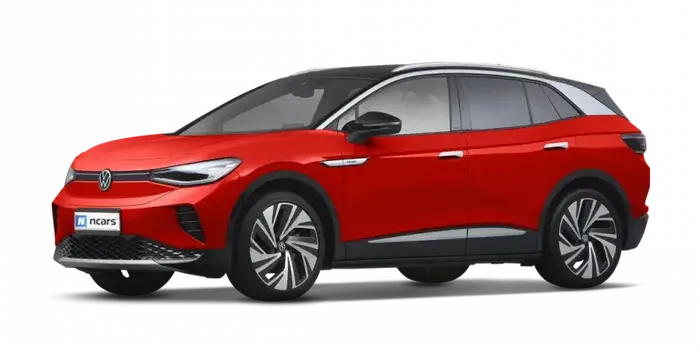
Selected owner and service information from our Volkswagen ID.4 manual library.
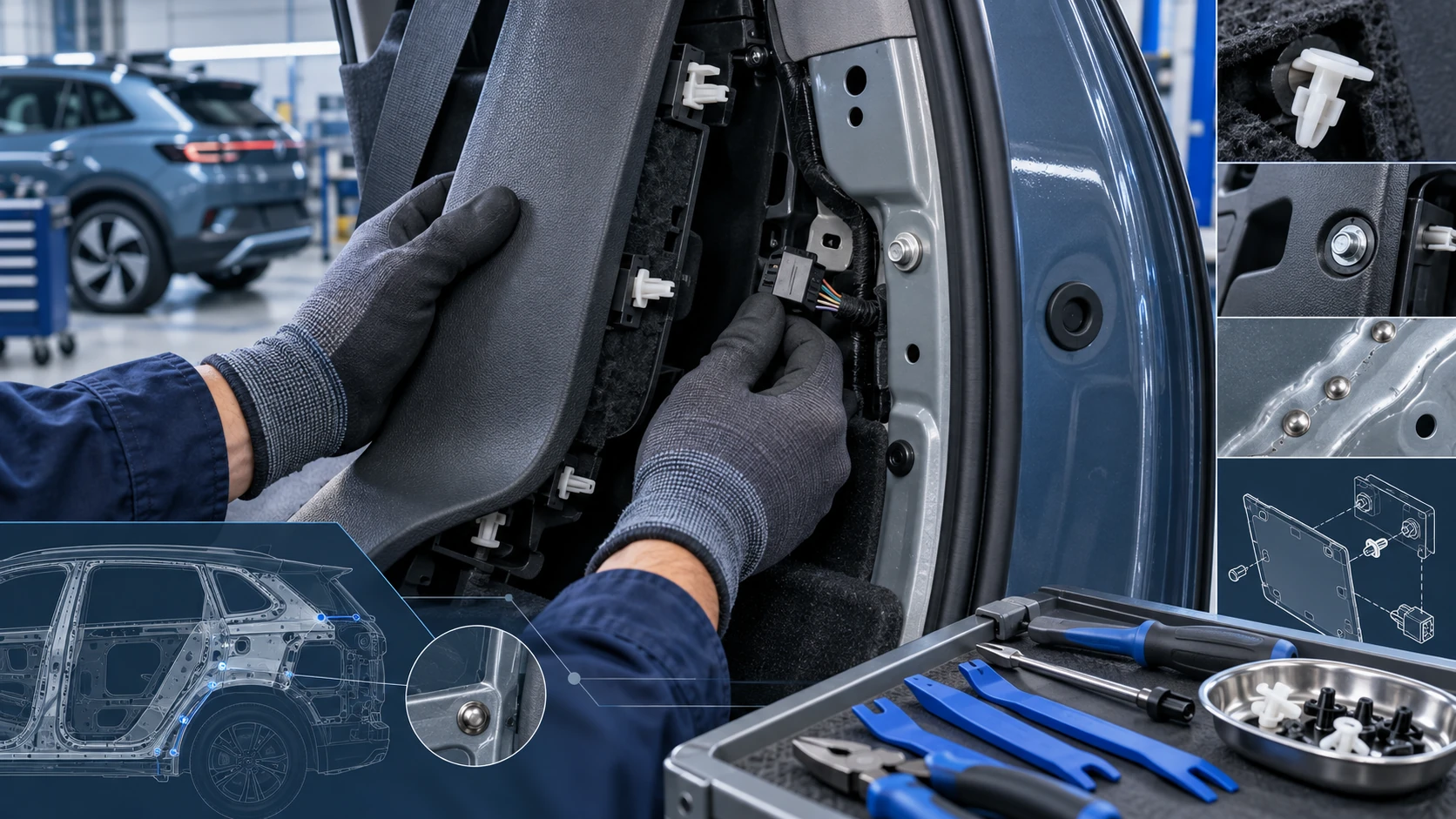 ID.4 Guide
Practical Volkswagen ID.4 service procedures for joining and separating components, connectors and assemblies correctly and without unnecessary damage.
Read guide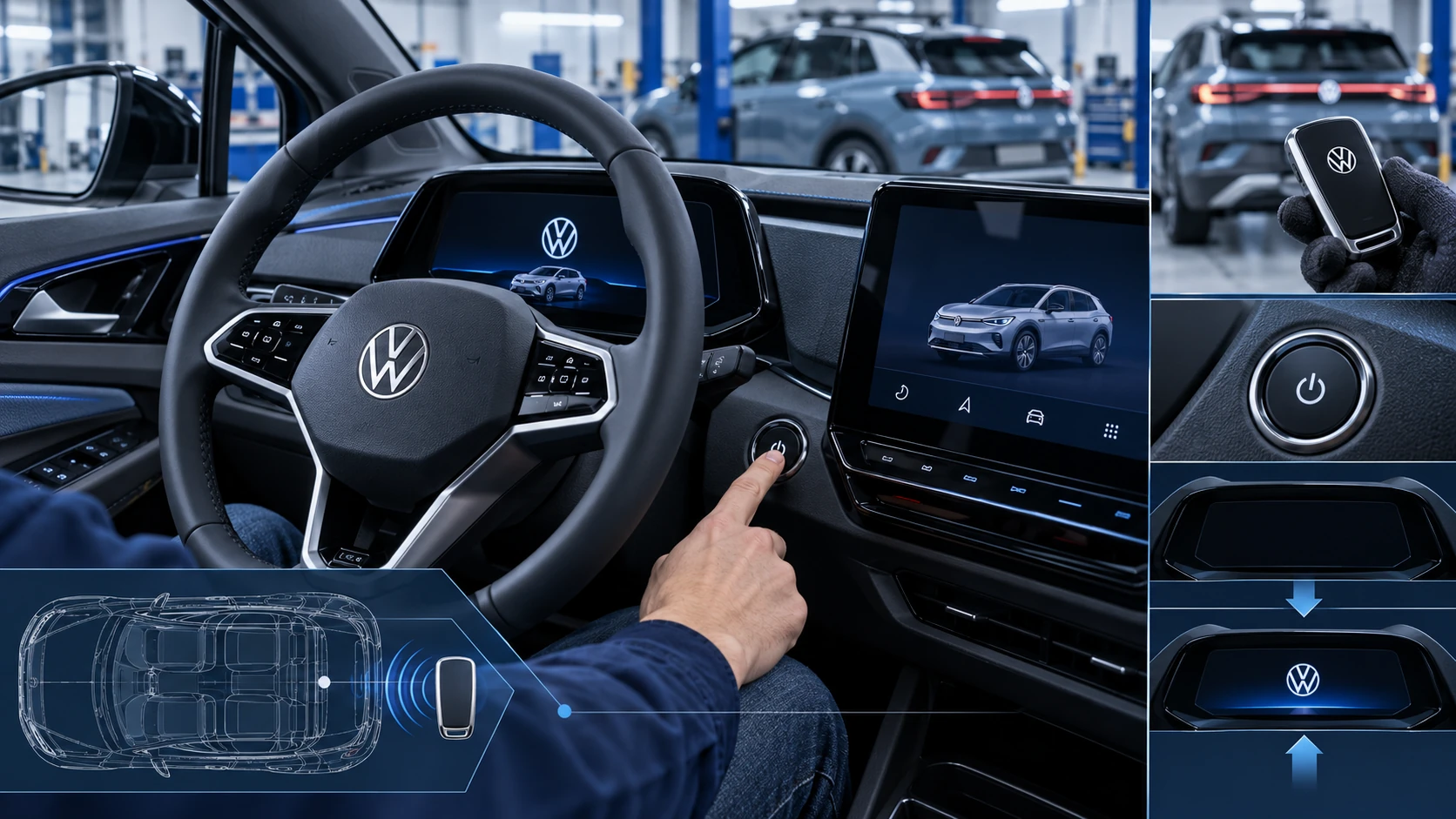 ID.4 Guide
How to switch the Volkswagen ID.4 ignition on and off correctly, including the basic operating conditions and what the driver should expect from the vehicle.
Read guide