Volkswagen ID.4: Correct seating position
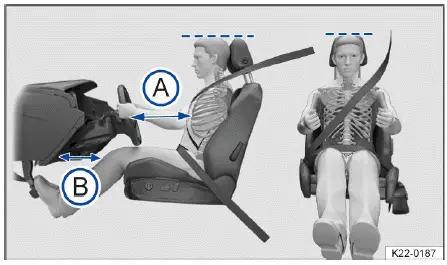
Fig. 1 General example: correct distance between the
driver and the steering wheel, correct safety belt routing
and correct head restraint adjustment.
The Volkswagen ID.4 is designed to provide maximum protection for all occupants when proper seating positions are maintained. The following recommendations describe the correct seating posture for both the driver and passengers to ensure optimal safety and comfort.
If a person cannot achieve the correct seating position in the Volkswagen ID.4 due to physical limitations, it is strongly recommended to consult an authorized Volkswagen dealer or Volkswagen Service Facility. They can provide guidance on possible adaptations or special modifications. Safety belts and airbag systems deliver their full protective function only when occupants are seated correctly.
For enhanced safety and to minimize the risk of injury during sudden braking or an accident, Volkswagen recommends the following seating positions in the Volkswagen ID.4:
The following applies to all vehicle occupants:
- Adjust the head restraint so that its upper edge is aligned as closely as possible with the top of the head, but not below eye level. Keep the back of your head as close as possible to the head restraint → fig. 1.
- Shorter occupants should lower the head restraint fully, even if the head is below its upper edge.
- Taller occupants should raise the head restraint to its highest position.
- Always keep both feet positioned securely in the footwell.
- Ensure safety belts are correctly adjusted and securely fastened at all times in the Volkswagen ID.4.
The following additional points apply to the driver:
- Adjust the driver’s seat so that you can fully press the pedals while keeping your knees slightly bent and maintaining at least 10 cm (4 inches) distance from the instrument panel → fig. 1 B.
- Position the seat so that you can comfortably reach the upper section of the steering wheel.
- Keep the seat backrest upright so that your back is fully supported.
- Adjust the distance between your chest and the steering wheel to at least 25 cm (10 inches) → fig. 1 A, allowing you to hold the steering wheel with both hands and slightly bent elbows.
- The steering wheel in the Volkswagen ID.4 must always be directed toward your chest, not your face.
The following additional points apply to the front passenger:
- Keep the seat backrest in an upright position to ensure full back support.
- Move the seat as far back as possible so that the front airbag can deploy safely and effectively.
Introduction
Correctly fastened safety belts in the Volkswagen ID.4 keep occupants securely in position during sudden braking or collisions, significantly improving overall protection.
WARNING
The risk of serious or fatal injuries increases if safety belts are not worn or are used incorrectly.
- Before every journey in the Volkswagen ID.4, all occupants must sit properly, fasten their safety belts, and keep them fastened throughout the trip.
- Children must always be secured using appropriate child restraint systems suitable for their size and weight.
- Always use the correct buckle for each seat. Using an incorrect buckle reduces protection and increases injury risk.
- Never remove the safety belt while the vehicle is moving.
- Each safety belt is designed for one person only.
- Never allow children or infants to sit on another passenger’s lap while sharing a safety belt.
- Avoid wearing bulky or loose clothing that may interfere with proper belt positioning.
WARNING
Damaged safety belts significantly increase the risk of serious or fatal injuries.
- Prevent safety belts from becoming trapped in doors or seat mechanisms to avoid damage.
- If the belt webbing, latch, retractor, or buckle is damaged, have it replaced immediately by an authorized Volkswagen dealer or service facility.
- Never attempt to repair or modify safety belts yourself in the Volkswagen ID.4.
- Always use original, approved replacement parts specific to your vehicle model.
- Safety belts that have been stretched during an accident must be replaced, even if no visible damage is present.
WARNING
Improper handling of safety belts can lead to severe injuries or fatalities.
- Regularly inspect all safety belts and related components to ensure proper function.
- Keep safety belts clean and free from contamination.
- Do not allow liquids or foreign objects to enter belt buckles or locking mechanisms.
- Never twist, pinch, or allow safety belts to rub against sharp edges.
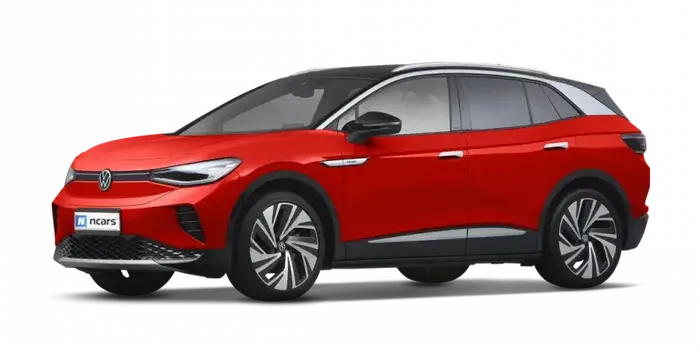
Volkswagen ID.4 2021-2026 (E21) Owner's Manual
Explore moreFeatured ID.4 Guides
Selected owner and service information from our Volkswagen ID.4 manual library.
 ID.4 Guide
Learn the basics of Volkswagen ID.4 bidirectional charging, including energy flow concepts, home power use and vehicle-to-home charging capability.
Read guide →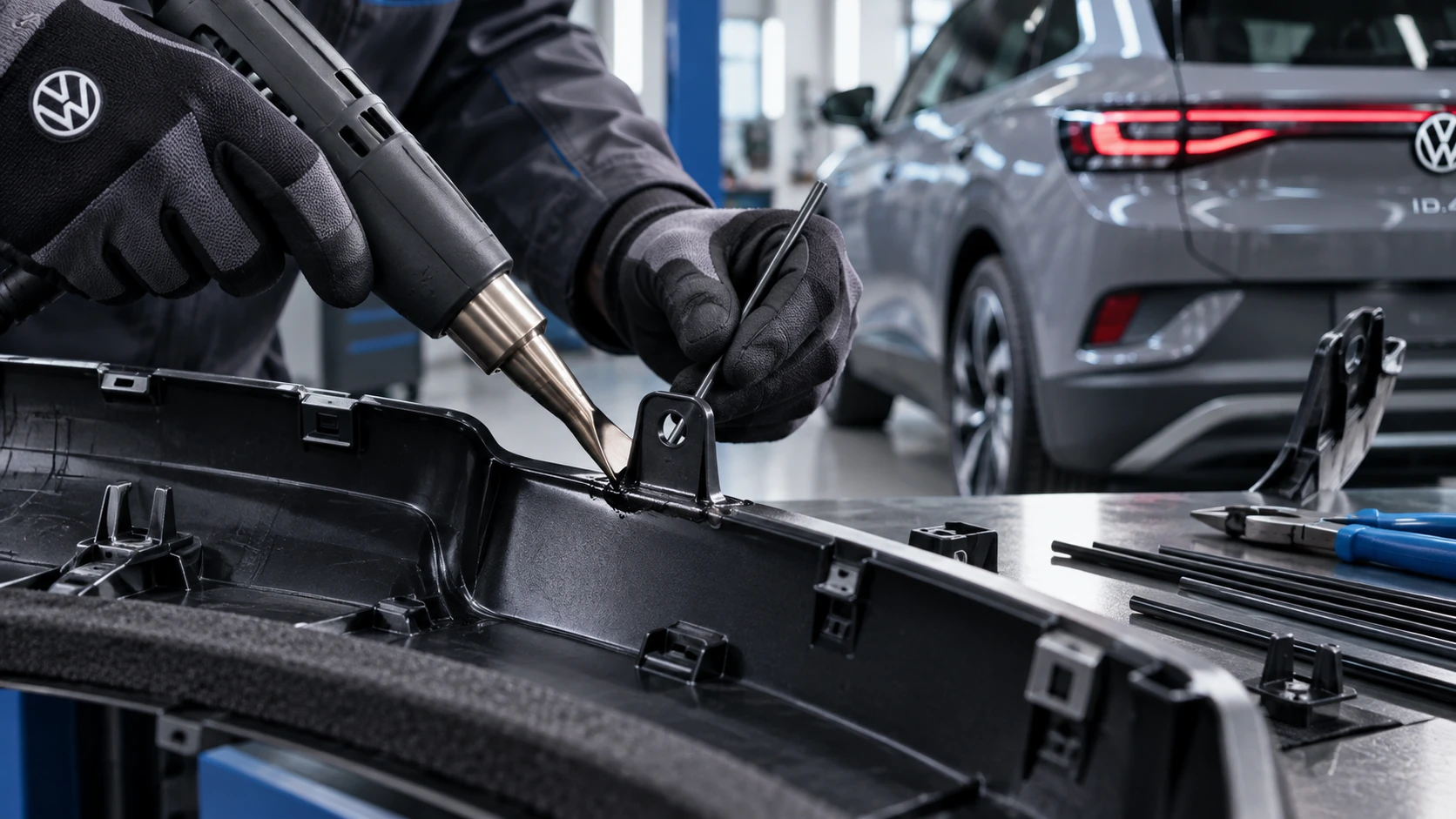 ID.4 Guide
Professional Volkswagen ID.4 repair guidance for welding plastic attachments, securing damaged mounting points and restoring plastic components correctly.
Read guide →