



Apple CarPlay
See how Apple CarPlay works in the Volkswagen ID.4, including smartphone integration, navigation, calls, music and key infotainment functions.
Read guide




The tire mobility set in the Volkswagen ID.4 is stored in the luggage compartment beneath the floor panel.
Sealing tires
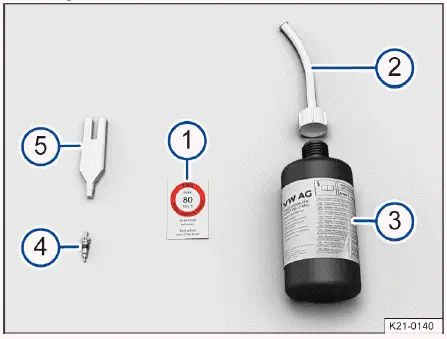
Fig. 1 Components of the tire mobility set (general
example).
 The valve insert tool → fig. 1 -5- features a slot designed specifically for removing and reinstalling the valve insert. This ensures proper handling of both the original and replacement valve inserts.
1. Place the speed warning label from the tire mobility set → fig. 1 -1- within the driver's field of view on the dashboard.
2. Unscrew the valve cap from the tire valve.
3. Use the valve insert tool → fig. 1 -5- to remove the valve insert and place it on a clean surface.
4. Shake the tire sealant bottle → fig. 1 -3- thoroughly.
5. Screw the tire inflation hose → fig. 1 -2- securely onto the bottle. This action will automatically break the seal.
6. Remove the plug from the hose and connect it firmly to the tire valve.
7. Hold the bottle upright and empty the entire contents into the tire.
8. Disconnect the empty bottle from the valve.
9. Reinstall the valve insert using the valve tool → fig. 1 -5-.
Pumping up tires
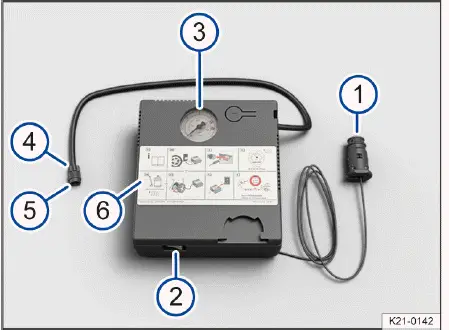
Fig. 2 Compressor in the tire mobility set (general
example).
 Depending on the model, the compressor may use a button instead of an air release plug.
 The compressor can be safely operated using the 12 V socket of the Volkswagen ID.4, even if its rated power appears higher than the socket specification.
1. Attach the compressor hose → fig. 2 -5- to the tire valve.
2. Ensure the air release valve → fig. 2 -4- is closed.
3. Activate the drive system of the Volkswagen ID.4.
4. Connect the 12 V plug → fig. 2 -1- to a vehicle socket (→ Sockets).
5. Turn on the compressor using the ON/OFF switch → fig. 2 -2-.
6. Inflate the tire to 2.0–2.5 bar (29–36 psi / 200–250 kPa). Maximum run time: 8 minutes →
 .
.
7. Switch off the compressor.
If the required pressure is not reached:
1. Disconnect the hose from the valve.
2. Move the Volkswagen ID.4 approximately 10 meters (33 ft) to distribute the sealant evenly.
3. Reconnect the hose and repeat inflation.
4. If the pressure still cannot be reached, the tire damage is too severe. Do not continue driving →
 . Contact an authorized Volkswagen dealer or authorized Volkswagen Service Facility.
Continuing Your Journey
1. Disconnect the compressor and remove the hose.
2. Drive immediately at a maximum speed of 80 km/h (50 mph), provided the correct pressure has been achieved.
3. After approximately 10 minutes, stop and recheck the tire pressure.
Check after 10 minutes of driving
1. Park the Volkswagen ID.4 safely on level ground.
2. Reconnect the compressor hose and read the pressure from the gauge.
1.3 bar (19 psi/130 kPa) and less:
1. Do not continue driving. The tire cannot be sealed adequately →
 . Seek assistance from an authorized Volkswagen dealer or service facility.
1.4 bar (20 psi/140 kPa) and above:
1. Adjust the tire pressure to the correct specification.
2. Drive carefully to the nearest authorized Volkswagen dealer or authorized Volkswagen Service Facility at a maximum of 80 km/h (50 mph).
3. Replace the damaged tire as soon as possible.
Volkswagen strongly recommends having the tire inspected and replaced by qualified professionals to ensure safety and performance.
WARNING
The compressor and hose may become very hot during use and can cause burns.
WARNING
If the tire cannot be sealed properly, it may continue to lose air during driving.
This may result in tire failure, loss of control, and serious accidents.
NOTICE
The compressor may overheat if used continuously for too long.
Proper use of the tire mobility system helps ensure that your Volkswagen ID.4 remains operational in emergency situations while maintaining maximum safety standards.
Selected owner and service information from our Volkswagen ID.4 manual library.
 ID.4 Guide
See how Apple CarPlay works in the Volkswagen ID.4, including smartphone integration, navigation, calls, music and key infotainment functions.
Read guide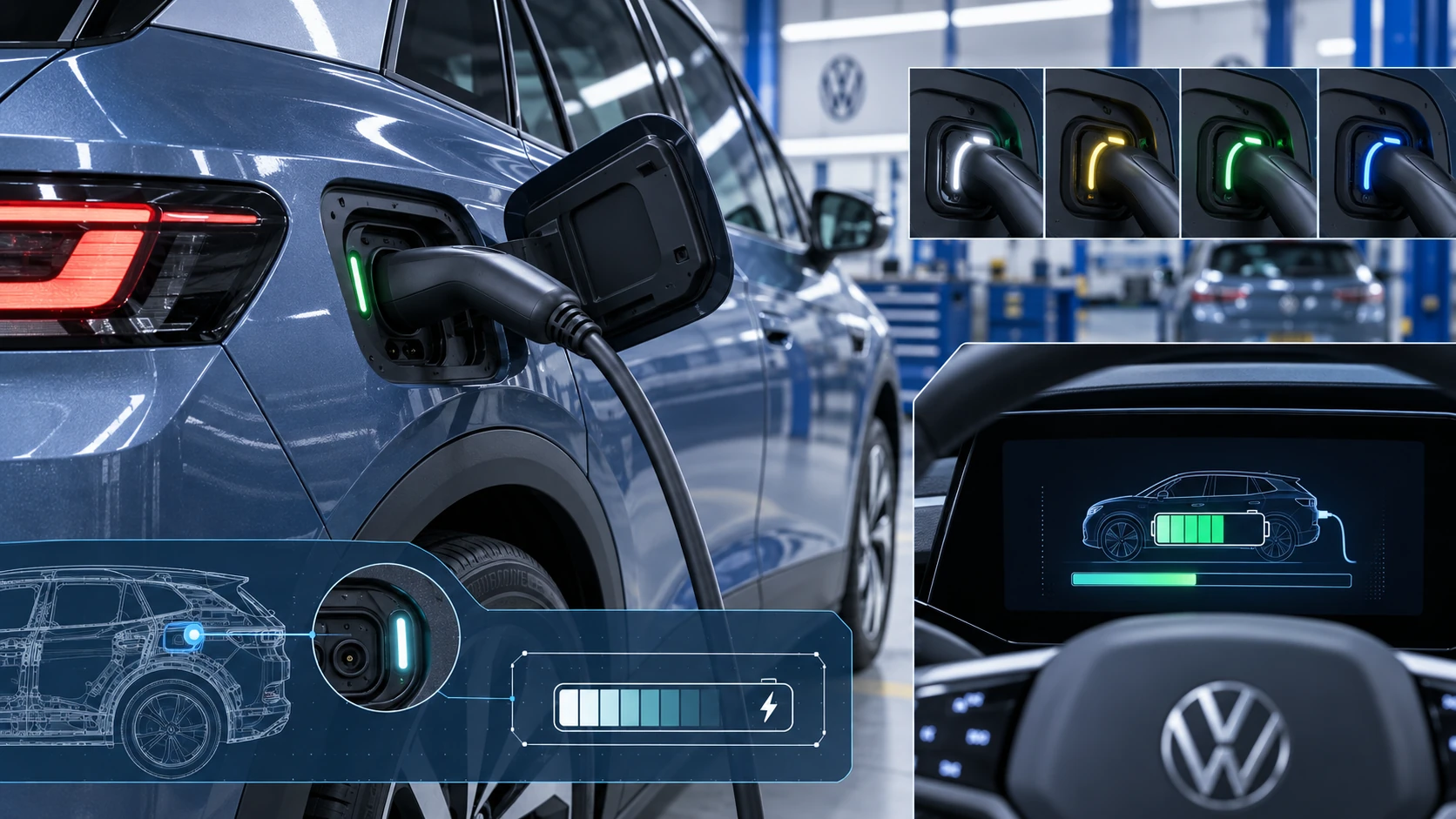 ID.4 Guide
Learn how the Volkswagen ID.4 charging process indicator shows charging status, progress and key visual signals during AC and DC charging.
Read guide